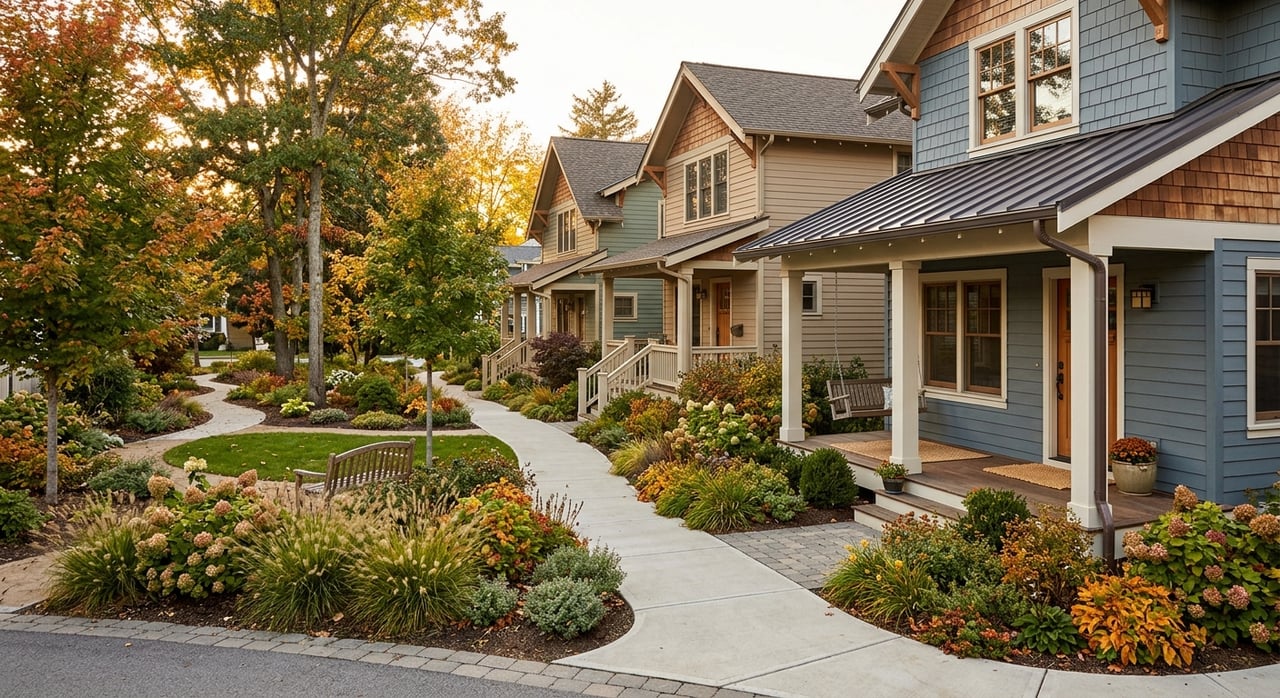
If you want Wilmington convenience without feeling cut off from the coast or disconnected from the city, Autumn Hall stands out fast. This neighborhood sits in a spot that makes daily life feel more flexible, whether you picture beach mornings, downtown dinners, or quick errands near home. For buyers comparing Wilmington neighborhoods, the real question is not just what Autumn Hall looks like, but what it feels like to live there. Let’s dive in.
Why Autumn Hall’s location stands out
Autumn Hall is located in Wilmington along the Eastwood Road corridor in New Hanover County. That matters because Eastwood Road is a primary route to Wrightsville Beach, and the city has identified improvements at Autumn Hall Drive as part of that corridor.
In practical terms, Autumn Hall gives you a position between two of the area’s biggest lifestyle draws. You are not choosing only a beach-oriented setting or only an urban one. You are choosing a neighborhood that offers access in both directions.
Beach side access feels built in
On one side of your routine is Wrightsville Beach. Official tourism information describes it as a village-like destination with white sand, watersports, shops, marinas, and seafood restaurants.
That means beach time can feel less like a major outing and more like part of your normal week. If being near the coast is one of your top priorities, Autumn Hall keeps that goal close without requiring you to live directly on the island.
Downtown Wilmington stays within reach
On the other side is downtown Wilmington. The city’s Riverwalk stretches 1.75 miles along the Cape Fear River, and downtown is known for boutiques, markets, cafes, art galleries, and scenic cruises.
For many buyers, that balance is the appeal. You can enjoy the energy of downtown Wilmington while still staying connected to the beach side of town.
What the neighborhood is designed to be
Autumn Hall is not simply a detached-home subdivision. Its master covenant describes it as a mixed-use community with residential neighborhoods, condominiums, apartments, commercial parcels, and open space.
That mix shapes how the neighborhood functions and feels. It gives Autumn Hall more of a planned village character than a purely residential tract built around car trips and larger separation between uses.
Traditional design gives it a distinct feel
The HOA describes Autumn Hall as a quiet neighborhood rooted in Southern home-building tradition. Features like gas lanterns, narrow tree-lined streets, sidewalks, and front-facing porches support that design approach.
For you as a buyer, that translates into a neighborhood with a strong visual identity. It feels intentionally planned, and that can be a major draw if you value streetscape, walkability within the community, and a cohesive look.
The first homes are relatively recent
According to the HOA, the first single-family home in Autumn Hall was built in 2009. So while the neighborhood has a traditional style, it is still a newer community by Wilmington standards.
That combination can appeal to buyers who want classic design language without stepping into a much older housing stock. It is a different proposition from historic downtown properties or more conventional suburban neighborhoods farther out.
What daily life can look like here
Autumn Hall’s amenities are centered on shared outdoor spaces rather than a resort-style amenity package. The HOA lists a community pool, and residents can reserve Arbor Park or the pool for certain uses.
This creates a setup that feels active but manageable. If you want neighborhood amenities without an oversized campus, Autumn Hall offers a simpler framework built around parks, the pool, and common areas.
Parks and outdoor gathering spaces matter here
The HOA rules note that residents have priority use of parks, and Arbor Park can be reserved for larger private events. Community-sponsored events do not have attendance limits.
That suggests the neighborhood places real value on common spaces and organized gatherings. For buyers who want a community with visible shared spaces, this is an important part of the Autumn Hall story.
A seasonal pool fits the coastal setting
The community pool is seasonal. That may sound like a small detail, but it helps set expectations for buyers comparing amenity communities.
Autumn Hall is not presented as a resort campus with year-round club infrastructure. Instead, it offers a coastal neighborhood amenity package that supports lifestyle without overwhelming the neighborhood’s residential focus.
How connected Autumn Hall is
Autumn Hall is also tied into Wilmington’s broader trail and bikeway network. The Gary Shell Cross-City Trail lists Autumn Hall as a point of interest on a 15-mile off-road, multi-use path.
The city also says the River to Sea Bikeway connects downtown Wilmington to Wrightsville Beach. That reinforces the same theme you see throughout this neighborhood: Autumn Hall sits in the middle of a useful and active corridor.
The trail connection adds another layer of convenience
If you enjoy biking, walking, or simply having access to multi-use routes nearby, this connection adds practical value. It supports recreation, but it also strengthens the neighborhood’s sense of connection to the rest of Wilmington.
For some buyers, this is the kind of detail that changes how often they actually use the city and the coast. Access matters, and Autumn Hall benefits from being near key routes rather than tucked away from them.
Shopping and dining are part of the appeal
Convenience is a major part of Autumn Hall’s value. Nearby Mayfaire is a major shopping anchor, with over 100 stores, 20 restaurants, and 3 hotels according to its official site.
That gives you a substantial retail and dining base close to home. If you want everyday convenience without giving up neighborhood character, this is one of Autumn Hall’s strongest advantages.
Nearby dining adds to the in-between lifestyle
Autumn Hall itself also includes dining on Autumn Hall Drive, including Origins Food and Drink and Pipeline Poke. Pipeline Poke’s listing notes that it is near Mayfaire and on the way to Wrightsville Beach.
That detail captures the neighborhood well. Autumn Hall is not isolated from daily conveniences, and it is not dependent on a single destination for lifestyle value.
What to know about HOA structure and standards
If you are considering Autumn Hall, the HOA structure is an important part of the decision. The neighborhood has design review requirements for fences, arbors, sheds, porch renovations, major exterior architecture changes, house color changes, and tree removal.
For some buyers, that level of review is a benefit. It helps protect the neighborhood’s visual consistency and reinforces the curated look that makes Autumn Hall distinctive.
Rules support appearance and upkeep
The HOA also limits contractor hours, with no construction on Sundays or holidays. Rules also restrict street and alley parking and address clutter in common areas.
This speaks to the kind of environment Autumn Hall is trying to maintain. If you appreciate a neighborhood with defined standards and organized upkeep, those rules may feel reassuring.
Organized management appears to be active
Current HOA materials show an event calendar, a social committee, and ongoing spending on landscape, facilities, pool, drainage, roads, and social programming. That points to a community with more active management and maintenance than a loosely structured subdivision.
As a buyer, this is worth noting because neighborhood experience is not just about home style. It is also about how shared spaces are maintained and how consistently the community is managed over time.
How Autumn Hall compares with traditional suburbs
When buyers compare Autumn Hall with more traditional suburban options, the differences usually come down to lifestyle and planning. Autumn Hall offers a mixed-use framework, sidewalk-and-porch design, shared parks, a pool, and stricter appearance standards.
A more conventional suburban neighborhood may offer a different lot feel or a more separated layout. Autumn Hall’s appeal is that it brings convenience, design continuity, and access to shopping, trails, downtown Wilmington, and Wrightsville Beach into one story.
Who this neighborhood often fits best
Autumn Hall can make sense if you want a neighborhood that feels intentional and connected. It may especially appeal to buyers looking for a master-planned setting with outdoor amenities, nearby dining and shopping, and practical access to both the beach side and downtown side of Wilmington.
It can also be a strong fit if you value structure. Buyers who appreciate design consistency and community standards often notice Autumn Hall for exactly that reason.
If you are weighing Autumn Hall against other Wilmington neighborhoods, the clearest takeaway is this: you are buying into more than a home site. You are buying into a location and neighborhood design that make the space between beach and downtown part of daily life.
If you want help comparing Autumn Hall with other Wilmington-area neighborhoods, planning a move, or narrowing down the right fit, Team Gale can help you move forward with clarity.
FAQs
What is Autumn Hall in Wilmington, NC?
- Autumn Hall is a master-planned mixed-use community in Wilmington with residential areas, condominiums, apartments, commercial parcels, and open space.
Where is Autumn Hall located in Wilmington?
- Autumn Hall is located along the Eastwood Road corridor in Wilmington, positioned between downtown Wilmington and Wrightsville Beach.
Does Autumn Hall have neighborhood amenities?
- Yes. HOA materials list a community pool, parks including Arbor Park, and shared spaces that support neighborhood events and gatherings.
Is Autumn Hall close to shopping and restaurants?
- Yes. Autumn Hall is near Mayfaire, which includes over 100 stores and 20 restaurants, and the neighborhood also has dining on Autumn Hall Drive.
Does Autumn Hall have HOA design rules?
- Yes. The HOA requires design review for several exterior changes, including fences, sheds, porch renovations, color changes, and certain tree removals.