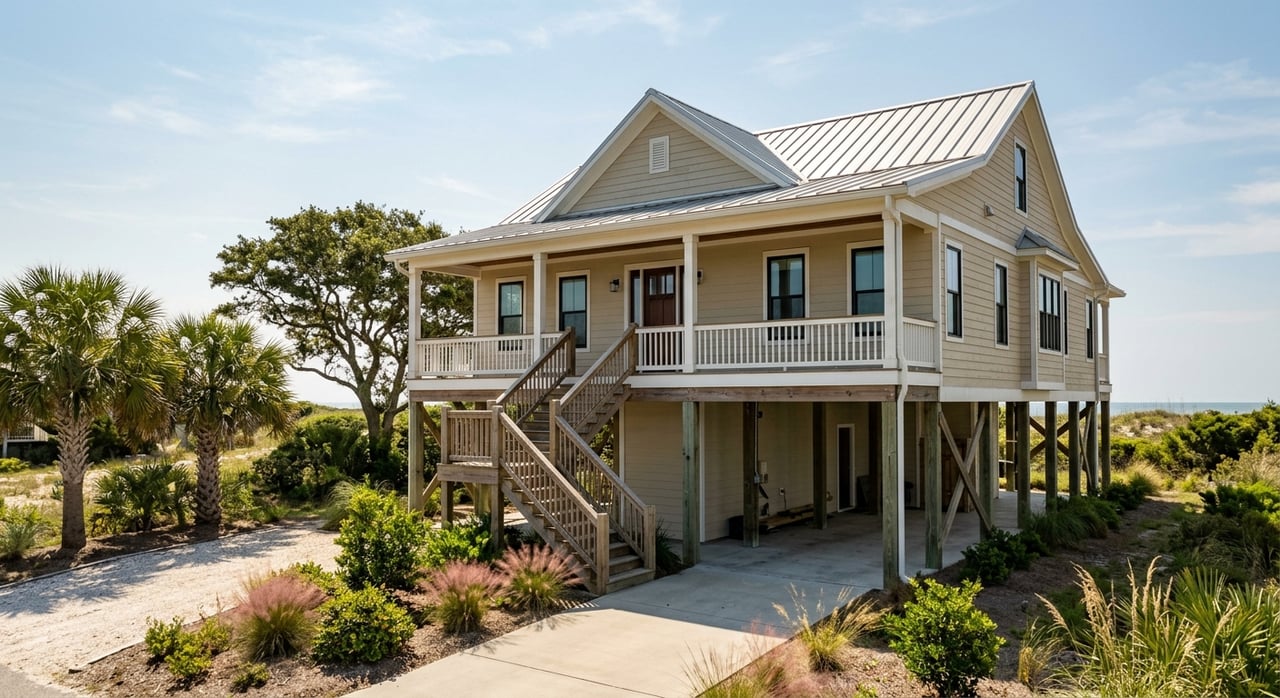
If you start your Surf City home search with only photos and price filters, you can miss details that shape daily life and long-term ownership. In this market, the difference between island and mainland location, county jurisdiction, flood zone, and parking rules can matter just as much as square footage. The good news is that once you know what to look for, you can search with much more confidence. Let’s dive in.
Why Surf City draws buyers
Surf City is the central commercial hub of Topsail Island, which gives it a different feel than some nearby beach towns. According to Pender County tourism, the town grew from a small fishing village and today serves as the island’s commercial heart, with access to the sound and Intracoastal Waterway corridor.
That central location matters when you are comparing convenience, access, and lifestyle. Surf City also spans more than one county, with official sources noting that part of the town lies in Onslow County and part in Pender County. For you as a buyer, that means property details can vary more than you might expect from one address to the next.
Know the island-mainland split
One of the first things to confirm is whether a home sits on the island side or the mainland side of Surf City. That is more than a map detail. It can affect how you think about beach access, errands, traffic patterns, and your route on and off the island.
The town is built around the NC 210 bridge connection. NCDOT says the current Surf City Bridge is a 65-foot fixed-span bridge that replaced the old swing bridge and allows traffic to keep moving while boats pass underneath. Surf City’s transportation planning also treats NC 210 and the bridge as key links to the beach, parks, the community center, and off-island businesses.
In practical terms, many buyers see island homes as a tradeoff for close beach proximity, while mainland homes may offer easier access to the broader highway network and everyday errands. Neither is automatically better. It depends on how you plan to use the property and what kind of routine you want.
Expect a mixed housing inventory
Surf City is not a one-style market. The town’s history shows steady growth over decades, evolving from a small fishing village into a year-round community. That history helps explain why your search may include older cottages, elevated beach homes, newer construction, and mainland parcels in the same general area.
This mix can be a real advantage because it gives you more ways to match your goals. You may find a move-in-ready primary home, a second-home option near the beach, a vacant lot, or a property that needs updates. The key is to compare homes based on use, condition, and site constraints, not just appearance online.
Check permits before you plan projects
If you are eyeing a vacant lot, a teardown, or a home that needs major work, do your permit homework early. Surf City requires permits for construction, renovations, signs, change of use, and development. The town also states that lot clearing is not allowed without a zoning permit.
That matters because coastal projects often involve more review than buyers expect. Surf City’s Community Development Department handles planning, zoning, inspections, code enforcement, permitting, and GIS mapping, so it is smart to verify what is allowed before you rely on a renovation budget or site plan.
Coastal overlay rules matter
Some properties are affected by the Coastal Forest Overlay District. According to Surf City’s zoning information, this overlay applies to all Topsail Island properties and to properties adjacent to coastal waters and marshes. If you are hoping to remove trees, open up views, or make site changes, those plans may be more regulated than they would be in a non-coastal market.
This is one reason a lot can look simple at first glance but still require careful review. If you are buying for future construction or expansion, parcel-specific due diligence is important.
Flood risk deserves parcel-level review
Flood zone details should be part of your Surf City search from day one. Surf City’s building inspections department enforces flood-damage prevention rules and requires elevation certificates in regulated flood zones. The town also states a 2-foot freeboard requirement above base flood elevation, which affects how new homes are built.
If you are considering newer construction or a substantially rebuilt home, ask for the elevation certificate and confirm the design standard used. That is a practical document, not just a technical one. It helps you understand how the home was planned for its site.
Pender County flood guidance also explains that FEMA maps define Special Flood Hazard Areas and distinguish AE zones from VE coastal high-hazard zones. For buyers, the takeaway is simple: do not assume all near-water properties carry the same risk profile. Two homes that look similar online may sit in very different flood contexts.
Look beyond the home itself
In Surf City, ownership experience is shaped by town rules and operations as much as by the house. That is especially true if you are buying a second home, a vacation-use property, or an investment property.
For example, the town closely manages beach access and parking. Surf City says all beach accesses are paid parking, with visitor fees in effect from March 1 through October 31 between 9 a.m. and 6 p.m. Current published rates are listed by the town as $3 per hour, $20 per day, or $60 per week.
Resident passes and re-entry rules
If you plan to own on the island, resident access details matter too. Surf City’s resident parking pass information states that residences can receive complimentary passes and that island residents may obtain re-entry passes after emergency evacuations. The town also notes that passes are not issued once an evacuation order is in place or bad weather begins.
That may not be the first thing you think about when shopping for a beach house, but it is part of real ownership in a coastal town. It is helpful to understand these systems before you buy, not after.
Beach rules can affect property use
Surf City also has specific beach-use rules that may matter if you want a second home or a rental. According to the town, dogs must stay on leashes no longer than 20 feet, tent camping is not allowed on the beach, beach equipment must be removed daily, and surfing is restricted near the pier during part of the year.
These are not small details if your buying plan includes frequent guest use or seasonal stays. It is wise to match your expectations with the town’s operating rules.
Rental income needs careful verification
If you are buying with rental potential in mind, confirm the exact tax and management obligations tied to the parcel. Pender County’s occupancy tax page lists a 6% occupancy tax in Surf City town limits. Surf City also states that it receives tax assessment files from both Pender and Onslow counties for billing and does not collect the Onslow County fee on rentals.
That means you should not estimate income based on broad assumptions. Instead, confirm jurisdiction, parcel location, and who will handle tax remittance before you rely on projected numbers.
Surf City also bills and collects its own real and personal property taxes, which Pender County notes are due September 1. That is another small but important operating detail to keep on your checklist.
Infrastructure and access are changing
Surf City is continuing to invest in how people move around town. The town’s NC 210 multi-use path project is intended to improve pedestrian and bicycle connectivity to the beach, parks, the community center, and off-island businesses.
For buyers, that adds useful context when you think about convenience beyond driving. If walkability, biking access, or easier beach connection matter to you, infrastructure plans can shape how an area functions over time.
How Surf City compares nearby
Surf City often appeals to buyers who want a central, service-rich setting on Topsail Island. Official tourism materials describe it as the island’s commercial heart, and the town promotes public beach accesses, parks, playgrounds, athletic facilities, a Bark Park, and a disc golf course. If you want easy access to both beach amenities and year-round services, Surf City is often where the search begins.
Nearby towns offer different setups. North Topsail Beach describes itself as more laid back and spread out across the northern end of the island, while Topsail Beach highlights its town center, marina, and beach-and-sound access network. Those comparisons can help you decide whether you want a more central base, a quieter layout, or a different village feel.
Smart questions to ask before touring
Before you tour Surf City homes, it helps to have a short list of practical questions ready:
- Is the home on the island or mainland side?
- Is the property in Pender County or Onslow County?
- What flood zone is the parcel in?
- Is an elevation certificate available?
- Are there permit or overlay issues that affect future improvements?
- How do parking, resident passes, or re-entry rules apply here?
- If the home may be rented, who handles occupancy tax and local compliance?
These questions can save you time and help you compare homes more accurately. In Surf City, ownership details can shape your experience just as much as the layout or finishes.
If you want help sorting through Surf City neighborhoods, flood-zone questions, lot constraints, or second-home tradeoffs, Team Gale is here to help you move forward with clarity.
FAQs
What should buyers know about Surf City’s island versus mainland locations?
- Surf City includes both island and mainland areas, and that can affect beach proximity, traffic patterns, errands, and access on and off the island.
What should buyers check about flood zones in Surf City?
- Buyers should review the exact parcel’s flood zone, ask for an elevation certificate when applicable, and avoid assuming that all near-water properties have the same risk profile.
What should buyers know about permits in Surf City?
- Surf City requires permits for construction, renovations, development, change of use, and even lot clearing, so future plans should be verified early.
What should buyers know about Surf City beach parking?
- The town states that all beach accesses are paid parking for visitors during the published season and hours, while eligible residences may receive complimentary resident passes.
What should buyers know about rental property rules in Surf City?
- Buyers should confirm the property’s jurisdiction, applicable occupancy taxes, and who is responsible for remittance before relying on projected rental income.
What makes Surf City different from other Topsail Island towns for buyers?
- Surf City is often seen as the most central and service-rich option, which can appeal to buyers who want a convenient mix of beach access, town services, and year-round activity.