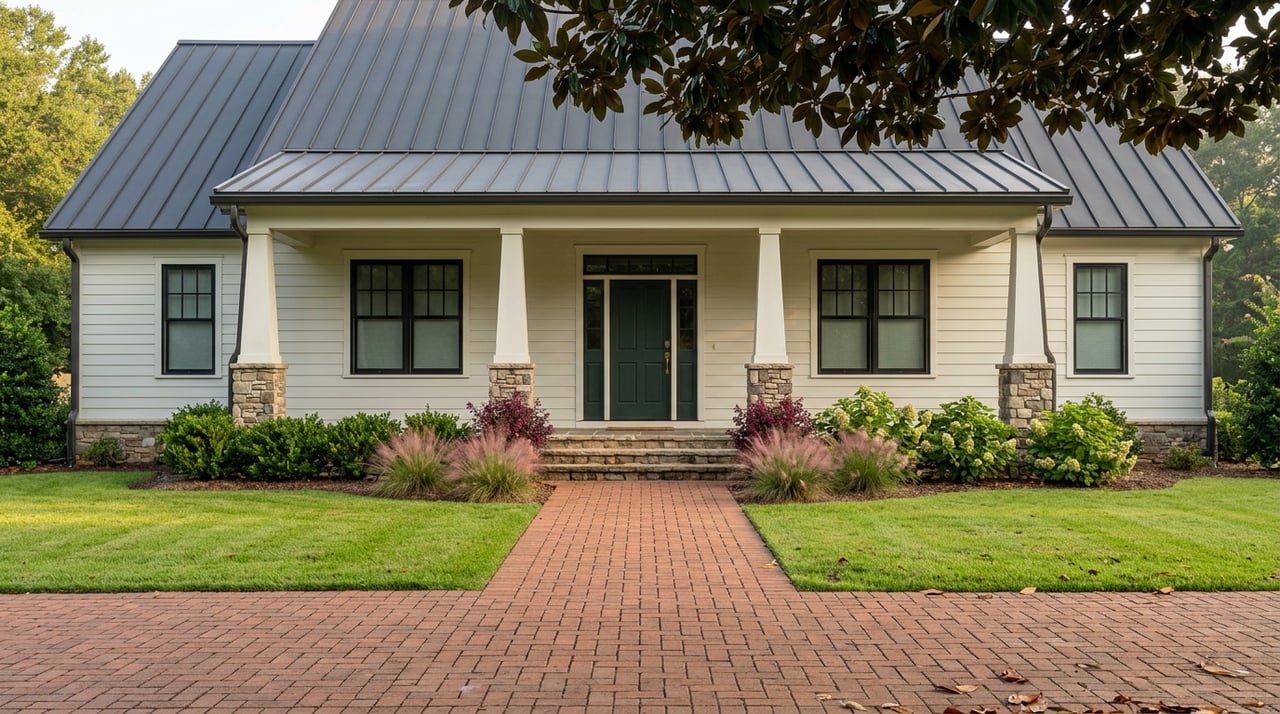
Two homes on the same street in St. James Plantation, both close to 2,800 square feet and both listed in the low $600s, can cost their new owners more than $20,000 differently in the first year alone. The difference has nothing to do with the house. It depends on whether the previous owner's club membership is set to convey, or whether the new owner is starting from zero.
That single question, asked before an offer instead of after closing, is worth more to a St. James buyer than almost any other piece of due diligence in this community.
Membership isn't automatic, and it isn't cheap
St. James Plantation is built around four clubs, Founders, Members, Players, and the newer Reserve, all operated under Troon Privé, the golf management company that runs the courses, dining rooms, and fitness facilities. Owning a home inside the gates does not require joining a club. What it requires is a club membership if you want to use the pools, courts, dining rooms, or any of the 81 holes spread across the four courses.
That distinction matters because club access is separate from home ownership. A golf-course home does not by itself include club access. Access comes with a membership contract, and that contract has its own price tag separate from the deed.
Signature Membership, the tier that includes golf, is structured as either a refundable deposit or a non-refundable initiation fee. The refundable option runs around $30,000, with roughly 80 percent returned if the member later leaves the club. The non-refundable version is closer to $15,000. A Sport-only membership, which covers pools, tennis, and fitness but skips golf, runs in the same neighborhood as the non-refundable golf tier. On top of any of these, full golf dues run somewhere between $550 and $650 a month.
None of that is unusual for a private club community. Another cost to consider is the transfer fee.
How an existing membership affects the cost
If the home a buyer is purchasing already has an active, transferable membership attached to it, that buyer doesn't pay the initiation fee at all. Instead, they pay a transfer or activation fee, generally around $5,000, to take over the existing membership.
That means the same golf access that costs a fresh buyer $15,000 to $30,000 can cost the next owner of a different house just $5,000, purely because of what the seller did or didn't do with their own membership status. Two houses, same size, same section, same list price range, and a $10,000 to $25,000 difference in upfront membership cost.
| Fresh Signature Golf membership | Transferred Signature Golf membership | |
|---|---|---|
| Upfront cost | $15,000 (non-refundable) or $30,000 (80% refundable deposit) | Roughly $5,000 transfer fee |
| Monthly dues | $550 to $650 | $550 to $650 |
| Who pays it | Buyer, at or near closing | Buyer, at or near closing |
The only way to know which scenario applies to a specific listing is to ask directly, in writing, before an offer goes in. A listing sheet may not include this information, so buyers should confirm the transfer rules directly.
Condo and villa owners may also pay a sub-association fee
Buyers looking at the community's lower-maintenance products, the Club Villas condos near the marina or similar attached homes, run into a second layer of cost. The master Property Owners' Association dues, which cover gate security, road maintenance, and common-area landscaping across the roughly 6,000-acre community, run in the neighborhood of $790 to just over $1,000 a year depending on the year measured. That figure has climbed steadily, with several annual increases in the mid-to-high single digits reported by buyers who track it closely.
On top of the master POA, condo and villa owners pay a separate sub-association fee, often $300 to $600 a month, that covers building-specific costs like exterior insurance, roof maintenance, and landscaping for that particular section. A single-family homeowner in one of the detached neighborhoods doesn't pay this second fee. A condo owner does, so when comparing a $315,000 golf-course condo against a $600,000 detached home, consider that the condo may carry meaningfully higher fixed monthly costs once the sub-association dues are added to POA dues and any club membership.
Why the median price you see online is close to meaningless here
In July 2025, the median sale price for St. James Plantation stood at $720,000, up 9.9 percent from the year before. By March 2026, the same neighborhood-level data put the median at $610,000, down 6.7 percent year over year. That's a $110,000 swing in less than a year, and it's less a story about the market cooling overnight than a symptom of what "St. James Plantation" actually contains.
The community spans HarborWalk flats a short walk from the marina, one-story Regency Lakes homes priced from the $340s, custom estate homes on the Reserve golf course that push past $1 million, and everything in between. A single median folds a $315,000 top-floor condo and a seven-figure waterfront estate into one number, which tells a buyer almost nothing about what their specific budget will actually buy in their specific section. Anyone comparing St. James to a neighboring community using headline median prices alone is comparing two numbers that don't measure the same thing.
The front gate is finishing its long construction chapter this year
For buyers weighing when to tour rather than whether to buy, there's a genuinely time-sensitive detail worth knowing. The NC 211 widening project, a $217.3 million effort that has run directly past the community's main entrance since construction began in January 2022, is on NCDOT's own schedule to reach its final traffic pattern in fall 2026. The State Port Pilot reported in August 2025 that the project was 59 percent complete, with crews raising the entrance roadway roughly two feet and working through paving near the Long Beach Road overpass.
The Town of St. James has coordinated with NCDOT and the property owners' association throughout, and Brunswick County issued advisories for temporary closures near the entrance as recently as this summer. For anyone who toured St. James a year or two ago and remembers construction noise and lane shifts at the gate, that disruption is winding down on the same timeline as this buying season, which is a reasonable thing to factor into how a fall tour compares to one from a year ago.
What to ask before you write an offer
A buyer serious about a specific St. James listing should get three answers in writing before submitting an offer:
- Does this home have an active club membership, and is it transferable to a new owner?
- If a sub-association applies to this section, what is the current monthly fee, and has it changed in the last year?
- What tier of membership, if any, does the seller currently hold, since Sport and Signature Golf carry different transfer economics?
None of these questions are things a listing sheet is required to answer clearly, and none of them show up in a median price. They show up in the closing statement, which is exactly where a buyer doesn't want surprises.
A few questions we hear often
Do I have to join a club to live in St. James Plantation? No. Club membership is optional. It's required only if you want to use the golf courses, pools, tennis and pickleball courts, or club dining rooms.
What if I only want the pool and dining, not golf? Sport and Social tiers exist below full Signature Golf membership, at lower initiation costs and monthly dues. The same conveyed-versus-fresh distinction applies at every tier, so the transfer question is worth asking regardless of which membership level you're considering.
Does buying vacant land change the membership math? Vacant lots don't come with a membership attached, since there's no prior owner's status to transfer. A buyer purchasing land to build later should expect to pay the initiation fee, not a transfer fee, whenever they choose to join.
If you're comparing St. James against other Brunswick County communities with a similar amenity-rich, golf-adjacent feel, our recent look at Winding River Plantation covers a lot of the same club-and-fee territory from a different angle.
Buying in a community built around private clubs means the purchase price is only part of the math. If you're evaluating a specific St. James listing and want a clear read on what its membership status actually means for your first-year cost, Team Gale can walk through it with you before you write an offer. Request a custom home search for St. James Plantation, get a home valuation if you're on the selling side of one of these memberships, or call (910) 541-1212 to talk through the fee structure on a home you're already watching.
This article is general information, not legal, tax or financial advice. Consult a qualified professional about your situation.